
Math can feel confusing, frustrating, or overwhelming for many students.
With the right instruction, students move from guessing to understanding.
Is This the Right Fit?
Many students find math frustrating at some point. For some, those challenges persist even with practice and repeated explanation. They may understand a concept one day and lose it the next, struggle to remember steps, or have difficulty connecting procedures to meaning. Over time, this can affect confidence even when effort is high.
This may be a good fit if your child:
Avoids math or feels anxious before math tasks
Loses track of steps in multi-step problems
Struggles to connect procedures to what they actually mean
Has difficulty with number sense, place value, or basic fact fluency
Understands concepts when explained verbally but has trouble applying them on paper
Has been diagnosed with dyscalculia or a math-related learning difference, or finds math consistently harder than expected despite effort
A formal diagnosis is not required.
How We Teach Math
Math becomes clearer when students can see what they are doing, not just follow steps. Our instruction is built on the Concrete–Representational–Abstract (CRA) framework, a structured progression that moves students from hands-on learning to visual models and finally to numbers and symbols. Each stage builds understanding before moving forward.
Concrete
Students begin with physical materials such as blocks, counters, and tiles to build a tangible understanding of math concepts. When students can see and move quantities, abstract ideas begin to make sense.

Representational
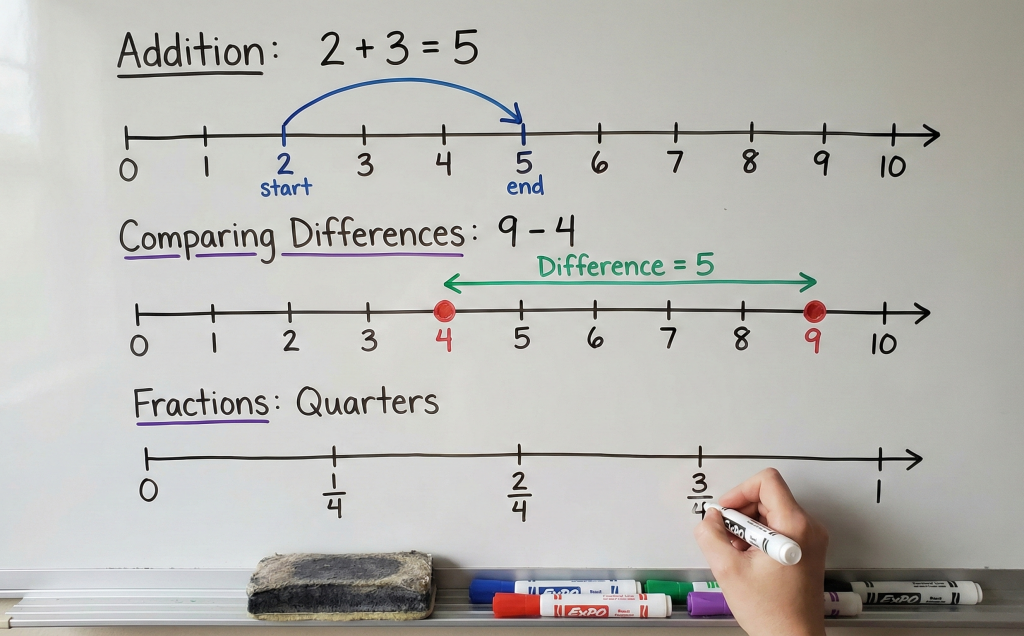
Students draw and model what they worked with concretely. Number lines, sketches, and diagrams bridge hands-on learning and symbolic math.
Abstract
Students work with numbers and symbols once concepts are grounded in understanding. Procedures are connected to meaning rather than memorized in isolation.
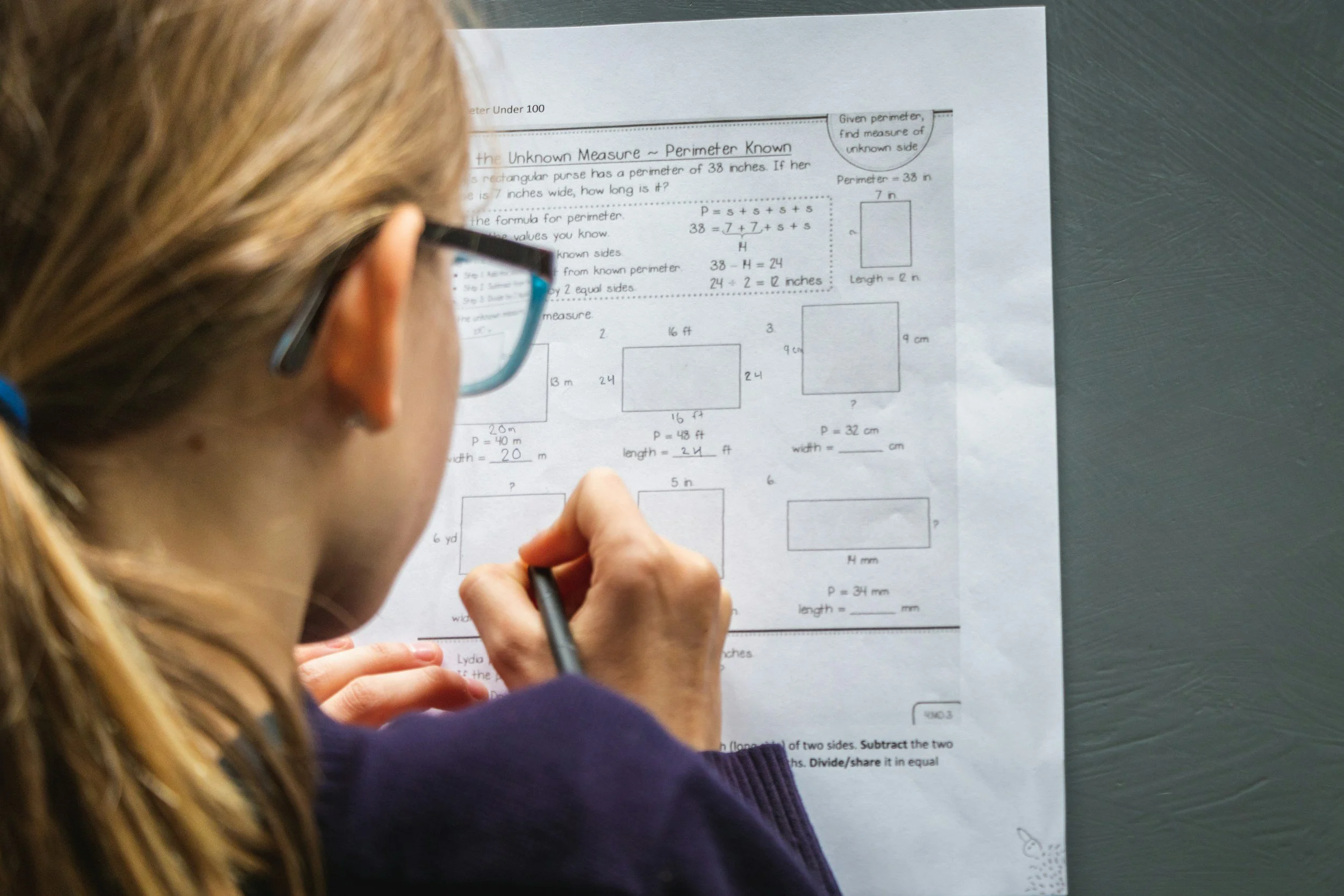
Throughout every stage, students explain their thinking out loud. This strengthens understanding, reinforces reasoning, and helps students identify and correct errors as they work.
What Makes Our Approach Different
Math instruction often focuses on procedures -- what to do -- without first building understanding of why it works. Students learn steps that can break down when problems look different or when memorization does not hold. Our approach builds understanding first, so procedures have something meaningful to connect to.
Students work with materials, models, and language at every stage. This is structured, explicit instruction that builds number sense and reasoning alongside computation skills, rather than relying on repetition or memorized rules.
Instruction is paced to the student. When a concept is not secure, we slow down and approach it from a different angle instead of moving forward and leaving gaps behind.
Our Approach and Curriculum Foundation
Our math instruction is grounded in the Concrete-Representational-Abstract framework and supported by structured, evidence-based approaches for students with math-related learning differences.
We incorporate materials and methods from Montessori math and Stern Math, which emphasize hands-on, sequential concept development and strong number sense foundations. These approaches align with how students build durable mathematical understanding over time.
PRS instruction also reflects structured literacy principles. Many students who struggle with math also experience challenges with language processing, working memory, or executive function. Instruction is designed to support the full learning profile, not just computation skills.
What Progress Looks Like
Early in instruction, students begin to rely less on guessing strategies. They slow down, use materials, and work through problems in ways that make sense instead of defaulting to memorized procedures they cannot explain.
As understanding builds, students start to connect concepts across topics. Place value supports multiplication. Multiplication supports fractions. Ideas begin to connect instead of feel separate.
Over time, math feels less like a set of unrelated rules and more like a system students can reason through. Confidence grows as understanding develops, not the other way around.