
About Dyslexia
Dyslexia is a learning difference that primarily affects reading and spelling. It is the most common learning difference affecting these skills. Students with dyslexia may have difficulty connecting the sounds of spoken language to the letters and letter patterns that represent them in print, blending sounds to read unfamiliar words, or developing automatic word recognition.
Dyslexia is neurobiological in origin, meaning it reflects differences in how the brain processes language rather than a lack of intelligence, effort, or motivation. It does not affect a student's ability to think, learn, or be creative. Many students with dyslexia are strong thinkers with excellent verbal skills, but they need explicit, structured instruction that matches the way they process language.
Students do not need a formal diagnosis to receive effective intervention. When reading or spelling skills are significantly behind, instruction can begin right away.
With the right instruction, students with dyslexia can build accurate, fluent reading skills and become confident readers and writers.
Common Characteristics of Dyslexia
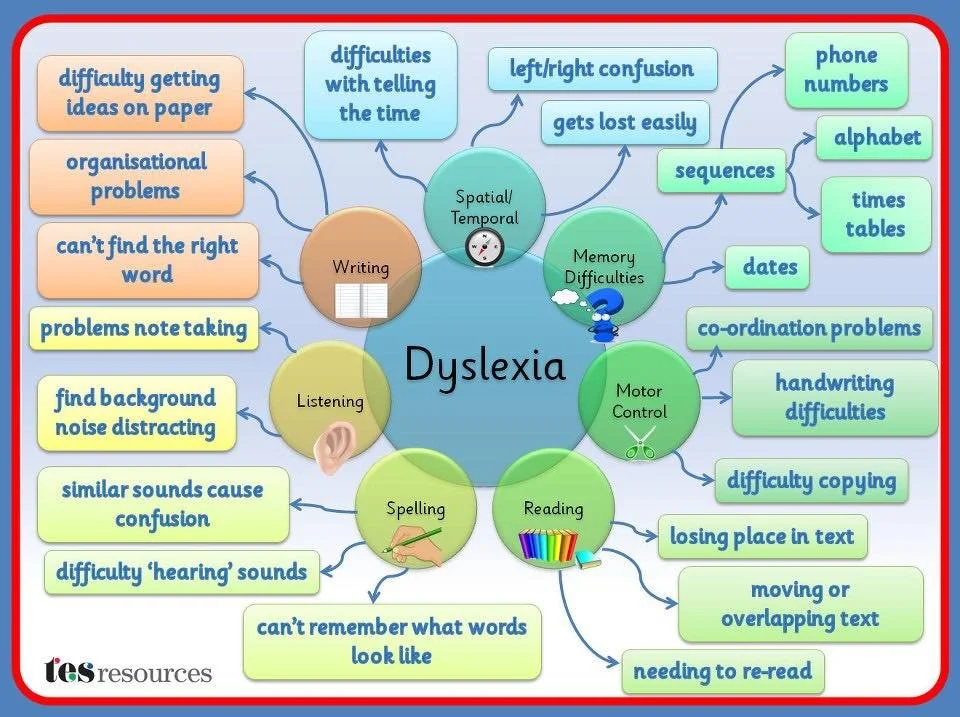
Difficulty learning letter names and sounds
Trouble blending sounds together to read unfamiliar words
Slow or inaccurate reading that does not improve with practice
Inconsistent or unusual spelling that does not follow expected patterns
Difficulty developing automatic word recognition
Avoidance of reading and writing tasks
A gap between strong verbal ability and written performance
A family history of reading or spelling difficulties
Common Misconceptions About Dyslexia
Dyslexia is not seeing letters backward. Letter reversals are common among early writers and are not, by themselves, a reliable sign of dyslexia. Dyslexia involves difficulty connecting sounds to print, not a problem with visual perception.
Dyslexia is not a sign of low intelligence or low effort. Many students with dyslexia are strong thinkers and hard workers whose reading skills have not caught up with their abilities.
Dyslexia is not something a student simply outgrows. Like dysgraphia and dyscalculia, dyslexia responds to explicit, structured instruction that directly teaches the sound-to-print connection.
How We Support Students with Dyslexia
Our tutors use structured, linguistic literacy approaches grounded in the Science of Reading, with certifications and training across programs including EBLI, Reading Simplified, Sounds-Write, and That Reading Thing. Each tutor works within their area of training, and instruction follows a consistent, structured approach designed around the student's needs.
We provide explicit instruction in the skills that support reading and spelling, including phonemic awareness, sound-symbol connections, decoding, word recognition, and spelling patterns. The goal is not simply more reading practice, but targeted instruction that builds the underlying skills students with dyslexia need to become accurate, fluent readers.
We work with students across the full range of dyslexia profiles, from students who are just beginning to struggle to teenagers and adults who have tried multiple programs without enough progress. If your child has an IEP, 504 plan, or outside evaluation, sharing that information helps us understand their learning profile and get started efficiently.
We offer one-on-one instruction in Colorado Springs and online, and we are happy to coordinate with schools and educational therapists when that supports the student.
Resources
-

Dyslexia: First 100 Days
Suspect dyslexia? Just diagnosed? Here is a great roadmap for learning about dyslexia
-

Find your people
A network of parent-led grassroots movements who aim to raise dyslexia awareness and empower families.
-
Dyslexia support Facebook
Dyslexia Support, is an international group for parents of Dyslexics.
-

S2P / SLL / Linguistic Phonics Exploration
An Exploration of the Linguistic Phonics, or Speech to Print “approach” to teaching reading.
A diagnosis is the beginning, not the limit.
Book a free consultation and we will talk about where your child is and what instruction can do.