
About Dysgraphia
Dysgraphia is a specific learning difference that affects written expression. It can impact handwriting, spelling, written language, or the ability to organize and express ideas on paper. Some students primarily struggle with the mechanics of writing, while others have legible handwriting but find it difficult to translate their thoughts into written language. Many experience a combination of both.
Dysgraphia often occurs alongside dyslexia, but it can also occur independently. It is neurological in origin, reflecting differences in how the brain manages the complex task of written language rather than a lack of intelligence, effort, or motivation.
With explicit, structured instruction, students with dysgraphia can build stronger, more efficient writing skills and gain confidence in expressing what they know.
Common Characteristics of Dysgraphia
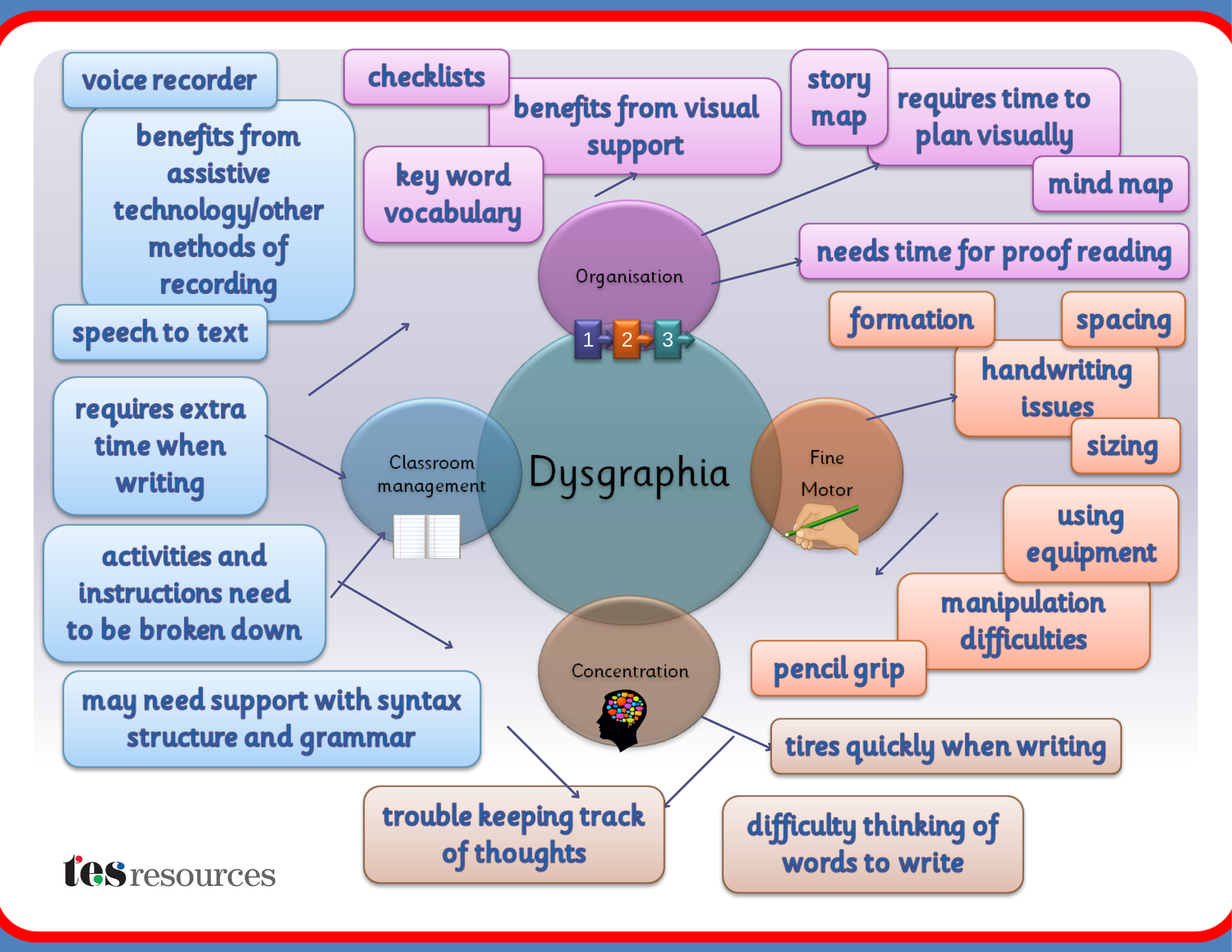
– Slow, effortful handwriting
– Inconsistent letter formation, spacing, or sizing
– Difficulty copying from the board or another source
– Trouble organizing ideas in writing
– Written work that is much weaker than verbal responses
– Writing assignments that take much longer than expected
– Avoidance of writing because it feels frustrating or exhausting
Common Misconceptions About Dysgraphia
– Dysgraphia is not simply “messy handwriting.” Some students have legible handwriting but still struggle to organize and express ideas in writing.
– Dysgraphia is not only about handwriting. Many students with dysgraphia have difficulty with spelling, word retrieval, or organizing ideas in writing, even when their handwriting itself is legible.
– Dysgraphia is not a sign of low intelligence or laziness. Many students understand the material well but cannot demonstrate their knowledge efficiently in written form.
– Dysgraphia is not something students simply outgrow. Like dyslexia and dyscalculia, it responds to explicit instruction that addresses the underlying skills.
How We Support Students with Dysgraphia
Writing is a complex skill that depends on many underlying abilities working together. We identify what is making writing difficult and provide explicit instruction that targets those skills, whether the challenge is handwriting, spelling, written expression, or a combination of all three.
Because writing involves so many different skills, we don't assume every student with dysgraphia needs the same instruction. Our goal is to identify the areas that will make the biggest difference and build from there.
For students whose handwriting is slow or effortful, we teach letter formation explicitly, using movement, rhythm, and verbal cues to help students develop efficient, automatic writing patterns rather than relying on tracing, copying, or repetitive practice alone. As handwriting becomes more fluent and automatic, students can devote more attention to spelling, language, and expressing their ideas.
Spelling and word study are taught through Root to Word, where students learn how words are built through morphology, roots, prefixes, and suffixes. Written composition is taught through PRS Writing Studio, using the thinkSRSD framework to explicitly teach planning, organization, drafting, revision, and the self-regulation strategies that help students become more independent writers.
We support students across the full range of written expression difficulties, from foundational handwriting skills to structured, multi-paragraph writing. Instruction is individualized to each student's strengths, needs, and goals.
Resources for Families
-
Understanding Dysgraphia
A clear, parent-friendly overview explaining what dysgraphia is, common signs, and how it affects learning.
-

Dysgraphia Community & Tools
A nonprofit organization dedicated to supporting families affected by dysgraphia, with articles, resources, and recommendations for helpful tools.
-
Dysgraphia Support Group for Parents (Facebook)
A parent community where families share experiences, strategies, resources, and support related to dysgraphia.
Dysgraphia is not a reflection of what your child has to say.
Book a free consultation and we will talk through what you are seeing and where to start.